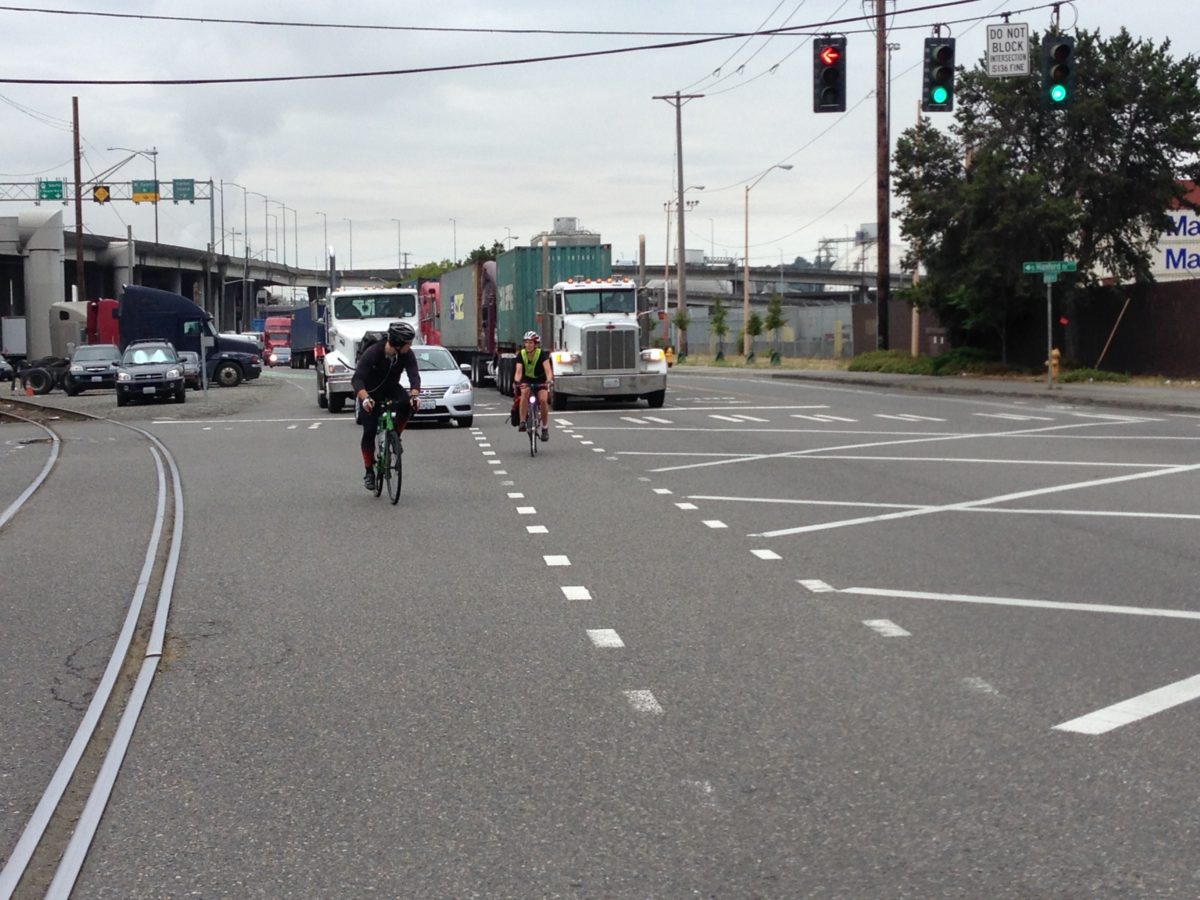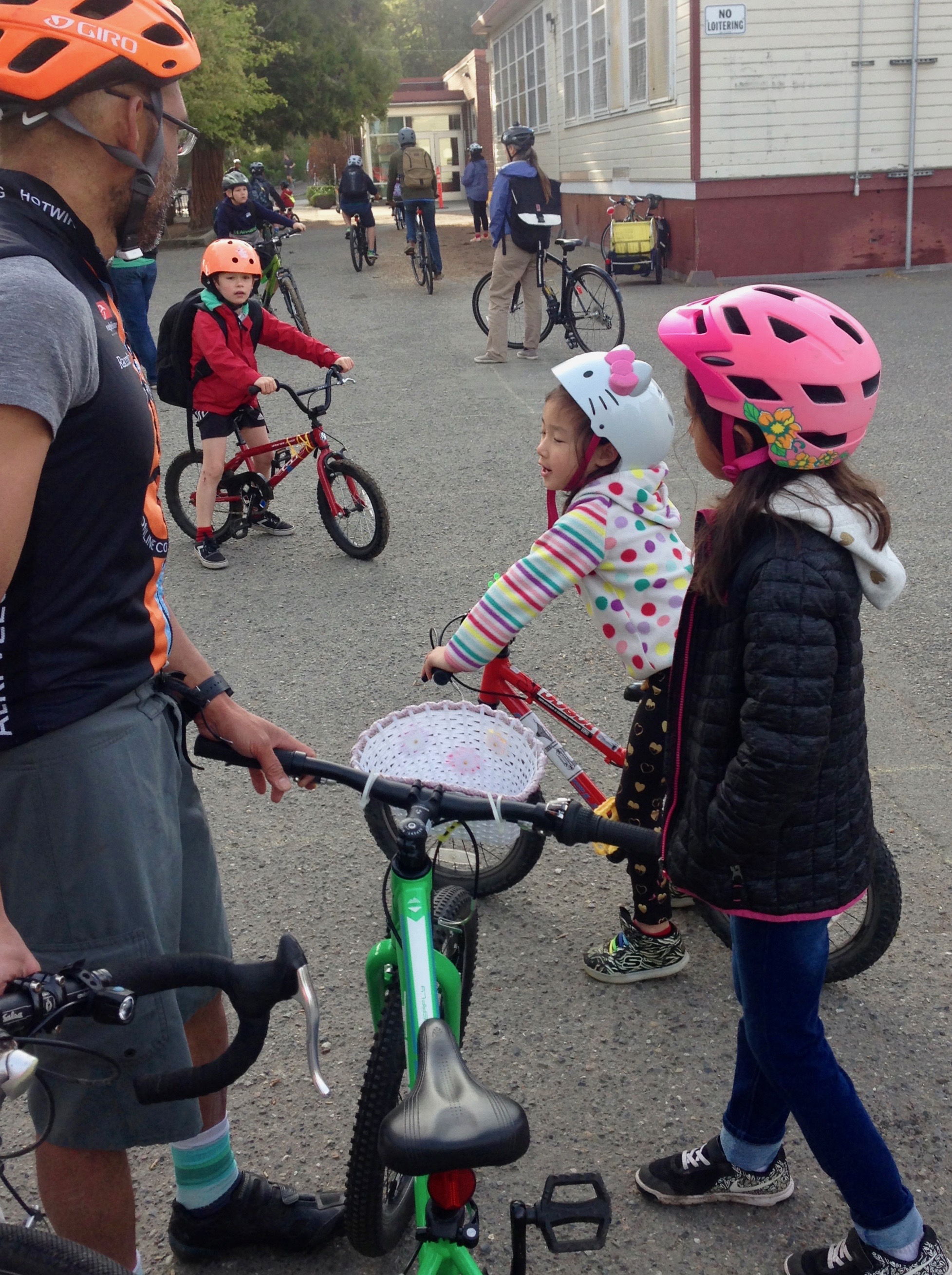

Seattle has been an early adopter city for ebikes in the U.S. and they can be found all over the city every day of the year. The transportation calamity of the closure of the West Seattle Bridge has set the stage for West Seattle to be the epicenter of this adoption going forward. It is going to be easier and faster to get almost anywhere in the city from West Seattle, by bike for years to come. Even with the contingency of closing the Spokane bridge to all traffic. Riding an ebike will be preferable to idling in the gridlocked traffic we can anticipate on the arterials leading to the 1st Ave bridge.
The upside is that for many people in the past few years, commuting into work on an ebike has already become the best part of their day. The pedal assist technology has enabled people to switch their primary transportation to a bicycle. People typically list several obstacles to using a bicycle as transportation to work. An ebike is not a solution to every issue but it is a solution to a quite a few and probably the most common; hills and sweat. Hills really don’t matter on an ebike. Sure you still have to pedal up hills but if you purchase the right bike they will no longer be an obstacle. You will not arrive at your destination with any extra sweat and in need of a clothing change or shower. You will even find that taking out all that exertion means breathable fabrics can easily achieve their purpose and riding in the rain becomes a minor inconvenience. As people in West Seattle are now confronted with a dire need to find a new way to get to work West Seattle Bike Connections will offer assistance to those interested in exploring bicycles as primary transportation.
In 2016 I started commuting by ebike and have been riding to work in Little Saigon everyday since. The following is a combination of what I have learned and what I struggled with when I first looked for my ebike. I always start with two recommendations; ride as many different bikes as possible to gain an understanding of the different user interfaces and spend more than you think you want to because once you own it, its perceived value will rise dramatically.
What Does it Mean?
- Purpose Built and Conversion – A purpose built bike is one that comes from the factory constructed specifically as an ebike. A conversion bike is a traditional (acoustic) bike with the motor, battery and controls added on after the fact. There is no reason not to explore either option, they both have their qualities. Of course one possibility is that you already own a nice bike that you would like to explore converting. In West Seattle we have a shop experienced in conversions; Alki Bike and Board. They will probably be able to determine if your bike is suitable with just a phone call.
- Hub and Mid Drive motors. Hub motors are motors that are constructed into the central hub of one of the wheels. Front hubs exist most commonly as a conversion kit and rear hub motors are extremely common on purpose built bikes. They are simple motors, relatively easy to maintain and even replace. They generally cost less than the mid drives. Mid drive motors reside at the shaft between the pedals. They are often more complex and cost a bit more. It is difficult to explain in words (back to my 1st recommendation) but because they sit in front of the drive train (pedals, chain and gears) they are much more interactive with the bike and rider. They also offer up more options for different user interfaces than a hub motor. On a mid drive bike if you break a chain or some other critical part in the drivetrain you are stuck, with a hub motor and a throttle you can still ride your bike home or to a shop. Fixing a flat on a hub drive wheel can be a cumbersome process. Fixing a flat on a mid drive bike is just like a flat on an acoustic bike.
- Torque, Cadence and Hybrid Sensing. The UI’s previously mentioned fall into these 3 categories. You really have to ride the different bikes to understand how this varies the experience. Cadence sensing is perhaps the most simple. There are sensors located around the front chain ring that pick up movement of the drivetrain and engage the motor. Move the pedals, the motor engages, stop pedaling the motor stops. Torque sensing motors actually respond to the force the rider puts into the pedals and factors that into the engagement of the motor and “feels” most natural. In both these systems there are different levels of power assist that the rider controls and another sensor on the spokes that registers speed. The onboard computer utilizes all this information to determine how much power the motor applies. A hybrid motor is simply some combination of the two systems melded into the programing in some proprietary manner. Just go ride them (please).
- Wattage, Voltage and Torque. These are the terms that speak to the power of individual bikes. This is also where the legal definitions of ebikes are formed. In the US an ebike is limited to 750w and this seems to be a reasonable dividing line between an ebike and the function of motorcycles. In Europe and Canada the limit is between 250w and 500w. I can tell you with Seattle hills you will be grateful for the higher wattage we are allowed. In general terms bikes come in 36 and 48 volt systems. Both work fine but I believe in Seattle you will generally be happier with a 48v bike. However, I have ridden a 36v bike for 4 years with no critical issue but my next bike will be 48v. The reason for this is torque. Torque is what I really think Seattlites should consider as it is what gets you up the hills with less effort. It also makes the start from a stoplight easier and quicker. When you ride different bikes this is what you will notice first and most. For climbing hills around the city I recommend torque output above 80 newton-meter but the number isn’t as critical as your own personal riding style, strength and comfort.
- “What is the range” The most common question asked is about range. The answer is again nebulous. Every ebike has a range of the range it can travel on a single charge. The terrain, wind, weight load, ambient temperature, power setting and rider ability will all determine the range an ebike will travel on a charge. Fortunately a rider has control over pieces of this. By changing the power setting and gearing, the range for a ride can be managed. I have discovered the range of my bike to be between 20 and 60 miles on a charge. On cold winter days you get less out of a battery. I can’t begin to address all the nuances of batteries in this article. When considering the range you will need bear in mind you will ride further than you think simply because it’s fun.
- Throttle or not? This again comes down to personal choice but also legal definitions. For the most part US laws are utilizing a designation system first developed in CA, for three classifications of ebikes (all within the federal definition of max 750w). Class one is governed at 20mph max and has no throttle, class 2 is the same 20mph max but has a throttle and class 3 is 28mph max with no throttle. Currently there is a lot of push to allow class 1 and sometimes class 2 bikes everywhere acoustic bikes are allowed and class 3 bikes are being limited to the streets. Very heated and very contentious discussions are common and the more people who take up ebikes the greater number of voices join in the discussion. By and large a 750w ebike is not going to have a throttle that performs like a motorcycle. Limit your expectations, they are not all that useful.
As I’ve mentioned several times already, bicycles are deeply tied to personal preferences. Although ebike technology is a big leap in the evolution of bicycles the overall foundation remains the same as the acoustic bikes. This means that there is a plethora of aftermarket options for personalizing your ebike. The ability to tailor the fit of your bike to your stature and riding style is the key. The factory cannot design a one style fits all bike but a lot can be done with changing the geometry of handlebars, handlebar stems/necks and seats. Almost all ebikes can accept a variety of these components to the original bike frame to allow for a more custom fit. Be aware however, that there are many ebikes utilizing some proprietary accessories and mountings that might restrict your use of aftermarket components. You either appreciate this or not but be aware of it if you plan on customizing your bike. You can also change the overall performance of an ebike by changing the size of the front chainring. Once you have your bike you can explore how changing this part of your drivetrain can really tune the bike to your style or standard terrain.
This traditional bicycle foundation means that the lion’s share of maintenance and repair work is no different from other bikes and is not beyond most people. I’m inclined to encourage everyone to learn basic bike repair either from youtube or local businesses that offer classes. At bare minimum learn how to fix a flat tire. Again we are very lucky in West Seattle to have bike shops that are quite familiar with ebikes. Please support these businesses when possible.
Nothing is more relative than the value of a dollar. The price range of ebikes run the gamut from somewhere just short of $1000 to the bill for a semester at college. Your budget in this is up to you. I caution folks against the cheapest options in triple digits as it seems you need to be comfortable doing a fair amount of maintenance and repair and many owners seem to end up spending a lot of time and money upgrading the components (both electrical and mechanical). I’m writing this article for people facing a major transportation shift imposed on them for years, you should be thinking of this as transportation not a toy or piece of exercise equipment. I guarantee that you will quickly discover that this vehicle has value far beyond what you first considered. Can you conceive your commute being the best part of your day? That is likely inconceivable. People have found that once they own this technology they discover many more uses for it, grocery shopping, transporting small children, neighborhood errands and simply getting out for a day trip.
My hope in writing this is that you will now feel prepared and perhaps emboldened to explore ebikes as an immediate solution to the systemic shift in transportation faced by our local community. We are lucky in Seattle and even West Seattle to have commercial support for ebike adoption. Your local bike shop in almost every case will have an ebikes on the floor. This wasn’t true just a few years ago but the US market shifted in 2017. No single bike shop is going to have every option covered and once again my first and final recommendation is to ride as many different bikes as possible.
Resources
West Seattle Bike Connections, Advocacy and Support:
- https://westseattlebikeconnections.org
- Face Book: https://www.facebook.com/WestSeattleBikeConnections/
Local shops (not a complete list)
- Alki Bike and Board: http://alkibikeandboard.com
- Westside Bicycle: https://www.woodinvillebicycle.com
- Rat City Bikes:http://www.rideyourbike.com
- Cycle Therapy: http://cycletherapybikeshop.com
- G&O Family Cyclery: https://familycyclery.com
- Seattle Electric Bike: https://www.seattleelectricbike.net
- Seattle Ebike: https://www.electricbikeseattle.com
- RAD Power Bikes: https://www.radpowerbikes.com
- Electric Bike Review, a well established site with video reviews of many different bikes. https://electricbikereview.com